
The pain starts low in your back or buttock and runs down the back of one leg, sometimes past the knee. A long meeting sets it off. So does climbing out of the car after a long drive. By the time most people start searching for sciatica treatment, they have already tried stretching it out or waiting for it to pass, and the leg is still sore.
Sciatica describes a group of symptoms, and the reason behind them differs from person to person. Understanding what is happening along the nerve makes it easier to see why assessment comes before treatment.
What is sciatica?
Sciatica is the name for pain and other symptoms linked to irritation or compression of the sciatic nerve, or of the nerve roots in the lower back that feed into it. The sciatic nerve is the longest in the body. It begins in the lumbar spine, passes through the buttock and runs down the back of the thigh before branching to the lower leg and foot. Irritate a root near the spine and the symptoms can appear anywhere along that path.
That is why leg pain from lower back problems can feel like a calf or foot issue. Working only on the sore spot in the leg does not always help, because the source may sit several segments higher.
Sciatica symptoms to look out for
Sciatica symptoms usually affect one side of the body. People commonly describe:
- Radiating pain: sharp, shooting, burning or electric-shock-like pain travelling from the lower back or buttock down the back or side of the leg, sometimes below the knee.
- Pins and needles: buzzing or prickling in the calf, foot or toes.
- Numbness or weakness: reduced feeling, trouble lifting the foot, or a leg that feels less reliable than usual.
- Activity-linked flare-ups: pain that builds with prolonged sitting, bending, driving, coughing or sneezing. Some people find walking or changing position eases it.
Not all lower back pain is sciatica. Pain that stays in the back or buttock without travelling into the leg may have a different source, and symptoms alone cannot confirm the exact cause. If your pain sits mainly in the back, our lower back pain page covers that in more detail.
Sciatica causes: what is happening in the lower back
Sciatica causes fall into several groups, and more than one can be involved at once.
- Lumbar disc herniation: disc material presses on or irritates a nerve root, sometimes after repeated bending, lifting or a sudden movement.
- Spinal stenosis: age-related changes narrow the space around the nerve roots.
- Spondylolisthesis: a vertebra shifts position and reduces the gap where a nerve exits the spine.
- Hip and buttock problems: these can mimic sciatic nerve pain or sit alongside a pinched nerve in the lower back, so not every case of buttock pain involves the nerve.
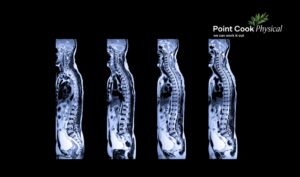
A disc bulge on a scan report sounds alarming. It is also a very common finding, and most people over 40 have one. The size and direction of the bulge influence what a person feels, and the link between imaging and pain is rarely consistent. Pain responds to many other things as well, including how sensitive the nerve is, how much you have been doing and how well you have been recovering.
Many people cannot point to a single incident. Symptoms build over weeks, or flare after a mix of heavy physical demands, poor recovery, long stretches in one posture and a sudden change in activity.
Sciatica at a desk and on the tools
Your occupation does not cause sciatica on its own. However the regular movements you do shape when and where the symptoms show up.
Desk workers and office professionals
Long periods of sitting or driving between meetings tend to bring on symptoms. Standing up from the chair can be the hardest part. Leg pain also makes it difficult to concentrate, and some people end up moving less through the day because every change of position hurts. Alternating between sitting and standing, taking short movement breaks and adjusting the workstation for comfort all take load off the area. No single posture suits everyone, so there is no need to hold yourself rigid.
Tradies and physically active workers
Repeated lifting, carrying and bending add up, as does working in confined spaces, twisting while handling materials and hours behind the wheel of a work vehicle. When leg pain or weakness starts to interfere with the job, it helps to pace heavier tasks, vary repetitive movements, use mechanical assistance where possible and temporarily modify the duties that aggravate symptoms while the cause is worked out.
How physiotherapy and osteopathy approach sciatica treatment
Physiotherapists and osteopaths each bring their own emphasis, and the process behind sciatica treatment overlaps a great deal.
Both physiotherapy for sciatica and an osteopath for sciatica will generally work through the following steps.
- Thorough assessment. Your practitioner asks about where the symptoms sit, when they started, what aggravates them, what your work involves and your medical history. They then check spinal and hip movement, leg strength, sensation and reflexes, and may use nerve-tension tests. This sets a baseline, points to possible nerve involvement and shows whether a referral for medical imaging is needed.
- Individualised exercise. Depending on what the assessment finds, a programme may include gentle movement and walking, work to improve spinal and hip movement tolerance, trunk and hip strengthening, stretching of tight muscles, retraining of movement patterns and carefully chosen nerve-mobility exercises. Anything that sends pain further down the leg or brings on new tingling or weakness should be reassessed rather than pushed through.
- Manual therapy where appropriate. Gentle spinal mobilisation or soft-tissue techniques can help some people manage discomfort and move more comfortably. They support exercise and self-management. They do not push a disc back into place or permanently release a trapped nerve.
- Work-specific rehabilitation. For desk workers, this means building tolerance for sitting and commuting and gradually lifting activity levels. For tradies, it can progress to lifting, carrying, squatting, climbing and task-specific conditioning, guided by symptoms and physical capacity.
- Education and self-management. You learn how to pace activity, manage flare-ups, stay active and recognise when symptoms need reassessment. Fear of movement and worries about getting back to work are addressed too.
These steps line up with clinical guidance that supports education, staying active, appropriately selected exercise and manual therapy as parts of a broader management plan.
Choosing between the two professions can feel like a coin toss. Either is a reasonable place to start, since both assess spinal, hip and nerve function, and both will point you toward a doctor or imaging if the findings call for it.
Sciatica pain relief strategies for the workday
While you arrange an assessment, a few habits can make the working day easier:
- Keep moving within your tolerance. Short walks and regular changes of position usually serve better than prolonged rest.
- Modify aggravating tasks for now. Adjust sitting duration, lifting loads and repetitive bending if they clearly worsen your symptoms.
- Build activity back gradually. Work towards your normal routine rather than waiting for every symptom to disappear before you move.
- Skip aggressive stretching. A stretch that helps one person can aggravate another, so exercises are best chosen after someone has examined you.
When sciatica needs more than a routine appointment
Seek emergency medical care immediately if you notice any of the following:
- New difficulty starting to urinate, an inability to urinate, or loss of bladder or bowel control.
- Numbness around the genitals, anus or saddle region.
- Severe or rapidly worsening weakness in the legs, particularly if both legs are affected.
New or progressive weakness in a single leg also warrants prompt medical assessment, even without the signs above.
Sciatica Symptoms And Treatment: Your Questions Answered
| Question | Answer |
|---|---|
| What is the best sciatica treatment? | The best sciatica treatment depends on what is irritating the nerve, which is why assessment comes first. Care often combines education, staying active, a tailored exercise programme and sometimes gentle manual therapy. Your physiotherapist or osteopath builds the plan around your symptoms, your work and how your body responds. |
| Should I see a physio or an osteopath for sciatica? | Either can be a sensible starting point. Both involve a thorough assessment of spinal, hip and nerve function, followed by exercise, education and manual therapy where appropriate. Their emphasis differs slightly, and both can refer you for medical review or imaging if your findings call for it. |
| What are the most common sciatica symptoms? | Sciatica symptoms usually affect one side. They include sharp, shooting or burning pain from the lower back or buttock down the leg, pins and needles in the calf or foot, numbness or weakness, and pain that flares with sitting, bending, driving, coughing or sneezing. Pain confined to the back may have another cause. |
| Does a disc bulge on my scan mean I have sciatica? | Not necessarily. Disc bulges are a common finding, and most people over 40 have one, often without symptoms. The size and direction of the bulge influence what a person feels, but scan results and pain rarely match consistently. Your symptoms and examination findings guide what is likely causing the problem. |
| When is sciatica an emergency? | Seek emergency care immediately for new difficulty starting to urinate, inability to urinate, loss of bladder or bowel control, numbness around the genitals or saddle region, or severe or rapidly worsening leg weakness, particularly in both legs. These signs need urgent medical assessment, not a routine appointment. |

Final thoughts
Sciatica treatment starts with working out where the irritation is coming from, because a pinched nerve in the lower back and a hip problem can look alike from the outside. A thorough assessment, a plan built around exercise and your actual work demands, and clear advice give you a workable path forward, and outcomes vary from person to person. Scan findings do not tell the whole story, so the person in front of the practitioner matters more than the report.
If leg pain, tingling or numbness is getting in the way of work, book an assessment with our physiotherapy or osteopathy team, or call 03 9369 9766.