

One minute you’re pushing through a tempo run or chasing a ball at weekend social sport, and the next, it feels like someone has kicked you in the back of the ankle. There’s often a loud pop, a sudden weakness, and an immediate sense that something in your calf has given way. This is how most people describe an Achilles tendon rupture, and for active adults in their thirties, forties and fifties, a ruptured Achilles is a more common injury than most expect.
Many people assume surgery is the only way to fix it. Research over the past decade tells a more nuanced story, and the choice between surgical repair and conservative care depends on more than just whether the tendon has torn.
How an Achilles Tendon Rupture Builds Up Over Time
An Achilles tendon rupture rarely comes out of nowhere. Most tendons that tear have already been weakened by a process called Achilles tendinopathy, a gradual breakdown of the tendon’s fibres caused by repeated overload. Studies tracking patients with diagnosed tendinopathy have found that a small but real percentage go on to rupture, and the risk climbs with age.
The classic pattern is the ‘weekend warrior’: someone in their thirties to fifties who plays sport intermittently rather than training consistently, then ramps up activity faster than the tendon can adapt. A sudden jump in running distance, a change from treadmill to road, or returning to competitive sport after months off are all classic precursors to overuse-related sports injuries, including Achilles tendon rupture.
Other factors can increase the risk as well. Corticosteroid injections near the tendon have been linked to a higher chance of rupture, as have inflammatory conditions such as gout and a previous history of Achilles pain that was never properly addressed.
Warning Signs Before a Rupture, and What Happens When It Tears
Before a tendon ruptures, it often gives some warning, even if that warning gets ignored. Aching or stiffness at the back of the heel, particularly first thing in the morning or after exercise, is one of the more common signs of Achilles tendinopathy developing under the surface. A tendon that feels thicker than usual, or tender to touch a few centimetres above the heel bone, is worth getting checked rather than stretched out and ignored.
Achilles tendon rupture symptoms tend to be hard to miss. A sharp, sudden pain at the back of the ankle is the most common description, sometimes with an audible snap or pop. Walking normally becomes difficult almost immediately, and many people can’t rise onto their toes on the affected side at all. Swelling and bruising usually follow within hours, and some people can feel or see a gap in the tendon just above the heel (also called a torn Achilles tendon).
Treatment Options: Surgical Repair vs Conservative Care
When it comes to Achilles tendon rupture treatment, management generally falls into one of two paths: conservative (non-surgical) care, or surgical repair. Both are considered legitimate options for most patients, and the right one depends on age, activity level, general health and personal goals as much as the injury itself.
Conservative (Non-Surgical) Management
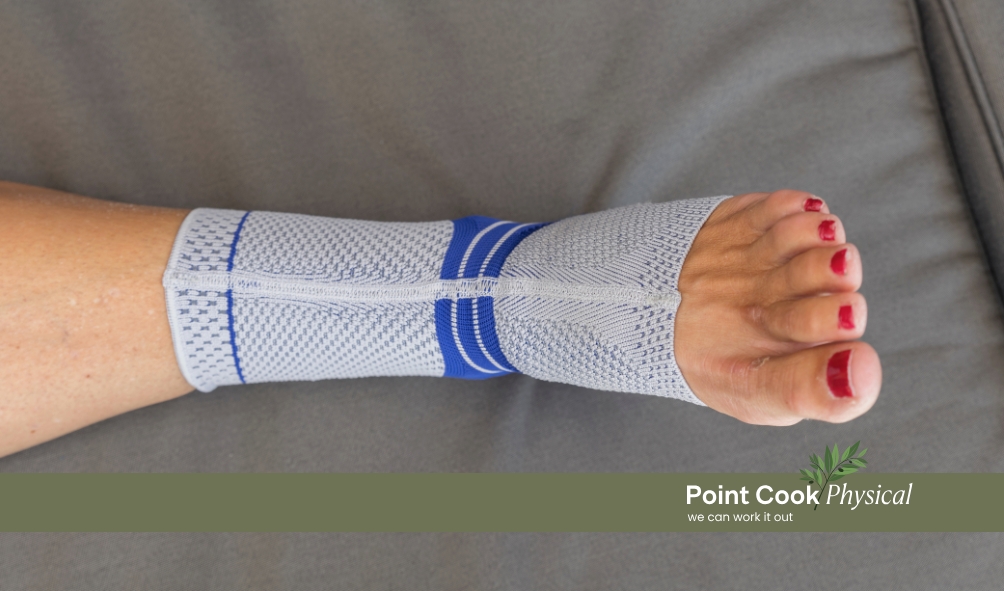
Conservative treatment usually starts with a walking boot fitted with heel wedges, which holds the tendon in a shortened position while it heals. The wedges are gradually reduced over several weeks as the tendon settles, alongside a structured physiotherapy programme. Casting is rarely needed for long, if at all.
The biggest advantage is avoiding surgical risk altogether. This matters more than it might sound, because the skin over the Achilles tendon has a limited blood supply and doesn’t always heal well after an incision. Conservative care sidesteps wound infection, nerve damage and anaesthetic risk entirely, which makes it a sensible option for older adults, smokers, people with diabetes or vascular disease, and anyone who would rather not take on surgical risk.
The trade-off is a modestly higher chance of re-rupture (research generally places this somewhere in the mid-single digits to around 10 percent, compared with roughly half that for surgical repair) and a tendon that can sometimes heal slightly longer than it started. For most people going about daily life, that difference is barely noticeable. For competitive athletes chasing every bit of push-off power, it can matter more.
Surgical Repair
Surgery involves stitching the torn ends of the tendon back together, either through an open incision or a smaller, minimally invasive approach. Recovery still involves a boot and physiotherapy afterwards. The procedure isn’t a shortcut to a faster recovery so much as a different set of trade-offs.
The main benefit is a lower re-rupture rate and, for many patients, better preservation of the tendon’s original length and tension, which supports calf strength and explosive movement. That can matter for competitive runners, footballers, and anyone whose sport depends on sprinting or jumping.
The downsides sit on the surgical side of the ledger: wound complications, a small risk of nerve injury (numbness or burning near the scar), and the general risks that come with any operation, including infection or the need for further surgery. These complications are not common, but they aren’t zero either.
Choosing Between the Two Isn’t Always Straightforward
Younger patients, competitive athletes, manual labourers and anyone with a large gap between the torn tendon ends on imaging tend to lean toward surgery. Older adults, recreational exercisers, and people who’d rather avoid the risks of an operation more often choose the conservative route. Neither choice is automatically wrong, and a growing number of orthopaedic surgeons now consider both reasonable for the average recreational athlete.
Achilles tendon rupture recovery, whichever path you take, isn’t quick. Most people spend the first few weeks in a boot, start gentle weight-bearing by six to eight weeks, and don’t attempt jogging until somewhere between three and six months. Return to sport sits closer to the six to twelve month mark, and many people notice the tendon continuing to feel stronger well into the second year.
This is exactly why it’s worth getting input from both an orthopaedic surgeon and a podiatrist or physiotherapist when weighing up surgical versus conservative treatment, rather than deciding from a single appointment or a single opinion online.
Can an Achilles Tendon Rupture Be Prevented?
Prevention isn’t guaranteed, but the risk can be reduced. The biggest lever is avoiding sudden jumps in training load. If you’re easing back into running or a new sport after time off, building volume gradually gives the tendon time to adapt rather than overload.
Persistent ache or stiffness at the back of the heel is worth assessing rather than working through. Addressing Achilles tendon pain early, before the tendon is significantly weakened, is one of the more reliable ways to reduce rupture risk down the track.
Footwear, calf strength and gait mechanics all play a part too. A podiatrist can assess how you load through your foot and ankle, identify whether your footwear or running technique is adding strain, and build a calf-strengthening programme suited to your activity level. None of this removes risk completely, but it stacks the odds in your favour.
Achilles Tendon Rupture: Your Questions Answered
| Question | Answer |
|---|---|
| What does a ruptured Achilles feel like? | Most people describe a sudden, sharp pain at the back of the ankle, sometimes with an audible pop or snap. Walking becomes difficult almost immediately, and many people can’t rise onto their toes on the affected side. Swelling and bruising usually follow within hours. |
| Do all Achilles tendon ruptures need surgery? | No. Research comparing surgical repair with conservative treatment shows similar long-term function for many patients when modern rehabilitation protocols are used. The right choice depends on age, activity level, general health and personal goals, not on the injury alone. |
| What are the warning signs before an Achilles tendon ruptures? | Aching or stiffness at the back of the heel, particularly in the morning or after exercise, can signal Achilles tendinopathy developing beneath the surface. A tendon that feels thicker than usual or tender a few centimetres above the heel bone is worth assessing rather than ignoring. |
| Can an Achilles tendon rupture be prevented? | Risk can be reduced, though not eliminated entirely. Building up training load gradually, addressing persistent heel or tendon pain early, and getting your footwear and gait assessed by a podiatrist all help reduce strain on the tendon over time. |
| How long does Achilles tendon rupture recovery take? | Most people spend several weeks in a walking boot, begin gentle weight-bearing by six to eight weeks, and aren’t jogging until three to six months post-injury. Return to sport typically falls between six and twelve months, with the tendon often continuing to strengthen beyond that. |
| What’s the difference between Achilles tendinopathy and a rupture? | Achilles tendinopathy is gradual wear and irritation of the tendon, usually causing aching or stiffness over weeks or months. A rupture is a complete or partial tear, typically sudden and painful. Tendinopathy that goes unaddressed is one of the risk factors for a later rupture. |
The Bottom Line
An Achilles tendon rupture is rarely a single bad-luck moment. It’s usually the endpoint of a tendon that has been under strain for a while, often without obvious warning until the day it gives way. Surgery and conservative care both have a legitimate place in recovery, and the right choice has more to do with your age, activity level and personal goals than which option sounds more serious. What matters most is getting an accurate assessment early, whether that’s in the lead-up to a rupture or in the days after one happens.
If you’re dealing with ongoing Achilles or heel pain, or you’re easing back into activity after a rupture, our podiatry team at Point Cook Physical can help you build a plan around your specific situation.
Book an assessment with our Point Cook podiatrist and get a clear read on what’s going on with your tendon, before or after things go wrong.