

Most people think about food in terms of “good” and “bad”: more vegetables, less sugar, more protein, less takeaway. That framing skips over something dietitians weigh just as heavily, which is how many different foods actually end up on your plate across a week. Nutritional variance, eating a genuinely wide range of foods rather than relying on the same five or six staples, plays into gut health, nutrient intake, and long-term disease risk in ways a simple “eat clean” message doesn’t capture. It’s also one of the areas our Point Cook dietitian spends the most time on with new clients, because the answer often reveals more than a food diary full of calorie counts.
What Nutritional Variance Actually Involves
Nutritional variance is simply the number of distinct foods, particularly plant foods, that show up in your diet over time. It isn’t about eating exotic ingredients or chasing trends. A week that includes broccoli, lentils, oats, blueberries, and walnuts already has more variance than a week built around chicken, rice, and the same two vegetables on rotation.
The clearest evidence for why this matters comes from gut microbiome research. Australian research has highlighted the important role that dietary diversity plays in supporting a healthy gut microbiome. Studies from groups such as the CSIRO have shown that eating a wide range of plant-based foods, including fruits, vegetables, legumes, whole grains, nuts, and seeds, can support greater microbial diversity in the gut. A more diverse gut microbiome has been associated with improved metabolic health, better immune function, and reduced inflammation, although researchers are still exploring the complex relationship between diet, gut bacteria, and long-term health outcomes. In practice, this means aiming for a balanced diet that includes a broad range of plant foods each week.
Variance also matters for the basics of nutrient intake, which is where most of the benefits of dietary variety actually show up. No single food, however nutrient-dense, supplies everything the body needs. Orange vegetables bring carotenoids. Leafy greens bring folate and vitamin K. Legumes bring soluble fibre and minerals that grains don’t. Berries bring a different set of polyphenols again. Eating a narrower range of foods, even healthy ones, tends to leave gaps that a slightly broader, balanced diet would close without much extra effort.
At a population level, dietary patterns that include a wide variety of nutritious foods are associated with a lower risk of chronic conditions such as cardiovascular disease, type 2 diabetes, some cancers, and premature death. The Mediterranean diet is the example studied most often, and its protective effects appear to come less from any single “superfood” and more from the sheer range of vegetables, legumes, whole grains, fish, and healthy fats eaten across a typical week. This is one reason why a balanced diet is typically defined by overall eating patterns rather than individual foods.
What’s the Minimum Food Variety You Actually Need?
There isn’t a single magic number, but dietitians tend to work from two related benchmarks. The first is built around food groups: aim for five to ten different vegetables, three to five fruits, two to four whole grains such as oats, brown rice, or quinoa, two to four protein sources like eggs, fish, legumes, or poultry, and a small rotating handful of nuts and seeds. Hit that range consistently and most people cover the bulk of their vitamin, mineral, and fibre needs without much extra planning.
The second benchmark looks specifically at plant foods, because that’s the measure gut health researchers use most often. When people ask about the minimum food variety per week needed for good health, twenty different plant foods (vegetables, fruit, whole grains, legumes, nuts, seeds, herbs, and spices all count) is the number that comes up again and again. Thirty or more is associated with stronger results again, though the gains taper off well before that point.
That tapering matters more than it sounds. Moving from under ten plant foods a week to the low twenties produces a meaningful jump in nutrient coverage and microbial diversity. Going from thirty foods to fifty produces a much smaller additional benefit, and pushing past fifty seems to add almost nothing for most healthy adults. The biggest gains sit at the lower end of the curve, which is good news if “eat 50 different foods a week” sounds unmanageable. It is unmanageable for most people, and it isn’t necessary.
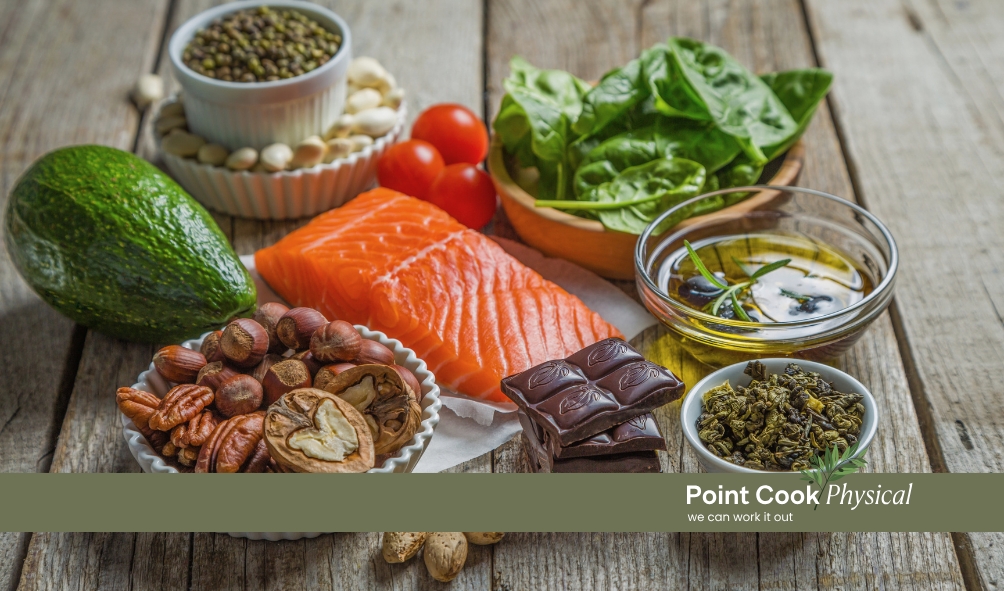
A simple week that reaches the twenty-food mark might include carrots, spinach, capsicum, tomatoes, and zucchini for vegetables, apples and bananas for fruit, oats and brown rice for grains, chickpeas and salmon for protein, almonds and pumpkin seeds for variety, plus garlic, ginger, and basil worked into cooking. That’s sixteen foods before counting anything eaten purely for taste.
Healthy Eating on a Budget: Creating a Varied Diet Without a Big Grocery Bill
Nutritional variance has a reputation for being expensive, mostly because people picture an overflowing trolley of exotic fresh produce. In practice, some of the cheapest foods available, frozen vegetables, dried legumes, oats, and seasonal fruit, are also among the most useful for hitting a variety target. Budget-friendly healthy eating in Point Cook doesn’t require an expensive weekly shop.
Lean on the freezer and pantry, not just fresh produce
Frozen vegetables and frozen berries cost less than their fresh equivalents in most cases, keep for months without waste, and hold onto comparable nutrient levels because they’re processed close to harvest. A few bags of mixed vegetables, peas, and frozen berries can add five or six different plant foods to a week for a fraction of the cost of buying them all fresh and using them before they spoil. Dried lentils, chickpeas, and beans work the same way on the protein and fibre side. They’re inexpensive per serving, store almost indefinitely, and rotating between two or three types across a fortnight adds meaningful microbial diversity without adding much to the grocery bill.
Add small “variety boosters” rather than new meals
You don’t need an entirely different meal to add a new food. A spoonful of chia seeds on porridge, a different dried herb in a pasta sauce, a handful of walnuts through a salad, or a different spice blend on roasted vegetables all count toward weekly plant variety. These additions cost very little per serving and don’t require extra cooking time, which makes them one of the easiest variance strategies to actually stick with.
Rotate your protein, don’t multiply it
Buying four different proteins every single week gets expensive fast. Rotating through a smaller set, chicken and tinned tuna one week, beef mince and lentils the next, achieves a similar nutritional spread over a fortnight without doubling the shopping list. The same logic applies to vegetables: five different vegetables this week and five different ones next week count toward variety just as much as ten different vegetables bought in a single week.
Buy what’s in season
In Australia, seasonal produce is consistently cheaper than imported or out-of-season alternatives, and it’s often the most nutrient-dense option on the shelf at that price point. Mandarins and pumpkin in winter, stone fruit and zucchini in summer, are usually the best-value way to add variety at the time of year they’re available.
Where Variety Fits Into the Bigger Picture
Variety is a genuine factor in good nutrition, not the most important one. Total vegetable intake, adequate protein, enough fibre, and a diet that’s mostly free of ultra-processed food carry more weight for long-term health than the exact number of different foods on your plate. Body weight and regular physical activity matter more again.
This is worth saying plainly, because variety can become its own kind of distraction. Someone eating the same twenty nutritious foods, week after week, in sensible portions as a part of a balanced diet, will generally be in better health than someone technically eating sixty different foods if a large share of those sixty are packaged snacks, sauces, and convenience meals. Chasing a higher plant-food count while ignoring overall diet quality misses the point of the research.
For most people, the practical takeaway is to treat nutritional variance as one useful lever among several, not a target to optimise above everything else. If your current diet already includes a reasonable spread of vegetables, some legumes, a couple of whole grains, and a rotating protein source, you’re likely closer to a healthy, balanced diet than the idea of “variance” might suggest. Refining it further is worthwhile, but it isn’t where most people should start if vegetable intake, fibre, or ultra-processed food consumption haven’t been addressed yet.
Benefits Of A Balanced Diet: Your Questions Answered
| Question | Answer |
|---|---|
| What is nutritional variance and why does it matter? | Nutritional variance refers to the number of distinct foods, particularly plant foods, that appear in your diet over time. It matters because no single food supplies everything the body needs. Different foods bring different nutrients, and a wider range supports gut microbiome diversity, better nutrient coverage, and a lower long-term risk of chronic disease. |
| How many different plant foods should I eat each week? | Aiming for around 20 different plant foods per week is a realistic, well-supported target for most adults. Vegetables, fruit, whole grains, legumes, nuts, seeds, herbs, and spices all count. Research suggests 30 or more is associated with stronger gut microbiome results, though the biggest gains come from moving out of a very narrow range rather than pushing past 30. |
| Does eating a more varied diet have to be expensive? | No. Frozen vegetables, frozen berries, dried lentils, chickpeas, oats, and seasonal produce are among the cheapest foods available and also among the most useful for hitting a variety target. Small additions like a different herb, a handful of seeds, or a different spice blend can add new plant foods to a week without meaningfully increasing the grocery bill. |
| Is dietary variety more important than eating healthy foods overall? | No. Total vegetable intake, adequate protein, enough fibre, and a diet mostly free of ultra-processed food carry more weight for long-term health than the number of different foods on your plate. Variety is a useful lever, but it works alongside overall diet quality rather than above it. |
| How can I add more variety to my diet without overhauling my meals? | Small additions work well. A spoonful of chia seeds on porridge, a different herb in a pasta sauce, a handful of walnuts through a salad, or a different spice blend on roasted vegetables all count toward weekly plant variety. Rotating proteins and vegetables across a fortnight, rather than buying everything new each week, is a practical way to increase variety without added cost or effort. |
| When should I see a dietitian about my diet? | A dietitian is worth seeing if you want a personalised assessment of your current nutritional intake, help building a more varied eating pattern, or guidance tailored to a specific health goal or condition. An accredited practising dietitian can develop an evidence-based plan designed around your lifestyle and individual circumstances. |
Final Thoughts
Nutritional variance isn’t a complicated new rule to follow. It’s a shift in how you think about a week’s worth of meals: rotating proteins, keeping a stock of frozen vegetables and dried legumes on hand, and adding small amounts of different herbs, seeds, and spices as you cook. Twenty or so different plant foods a week is a realistic, well-supported target for most adults, and it’s achievable on an ordinary grocery budget.
A consultation with our Point Cook Physical dietitian can help assess your nutritional needs and develop an evidence-based plan designed around your health goals, lifestyle, and individual circumstances.