

That thickened, discoloured toenail you’ve been avoiding looking at might not be what you think it is. Many people assume any unusual nail change is a fungal infection, and many others brush off what is actually a genuine fungal nail problem as just a cosmetic nuisance. Getting this distinction right matters because the path to treatment depends entirely on having the correct diagnosis.
This is where a podiatrist becomes your most valuable ally.
What Do Fungal Nails Look Like?
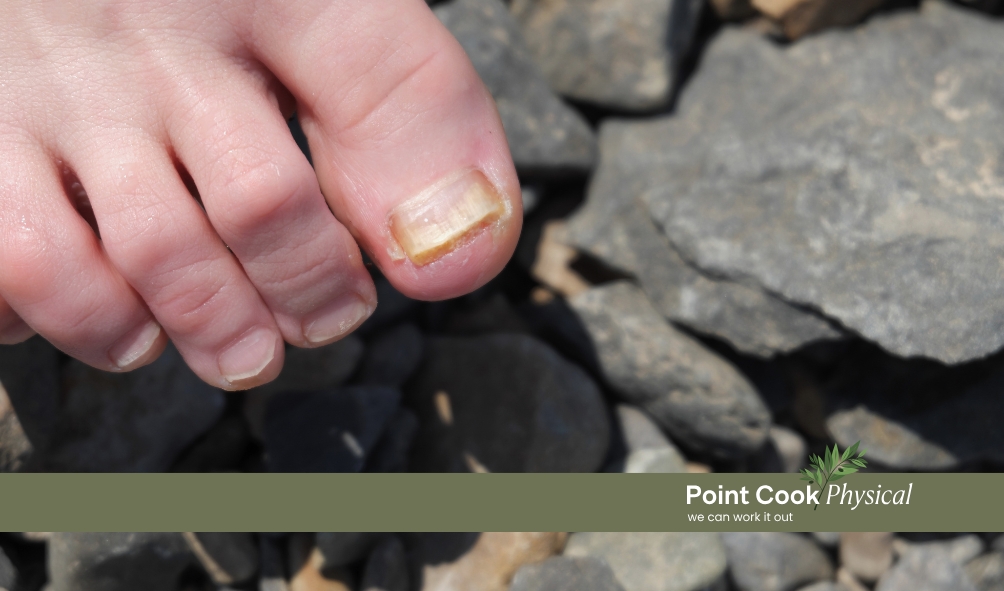
Fungal nails don’t always follow a predictable script. The presentation ranges from obvious yellow or brown discolouration to a chalky, crumbly texture at the nail tip. Some affected nails simply look slightly thicker or duller than the others on the same foot, with no dramatic colour change at all. The infection can start at the tip and progress inward, or it can begin underneath the nail plate and spread forward over time.
Common signs that may point to a fungal nail include:
- Yellowing, browning, or whitish patches on the nail surface
- A chalky or powdery texture when the nail is trimmed
- Thickening that makes the nail difficult to cut
- A nail that separates slightly from the nail bed
- Debris or build-up collecting under the nail
The complication is that several other conditions can produce almost identical changes. Trauma is one of the most frequent culprits, especially repetitive micro-trauma from footwear that’s slightly too tight, or from the sustained pressure of sport and exercise. Over months or years, this kind of mechanical stress can cause a nail to thicken and change colour without any fungal element present at all.
Medical conditions are another factor that gets overlooked. Psoriasis, for instance, can cause nails to thicken, bleed easily, lift away from the nail bed, and separate. The result can look very similar to a fungal infection on first glance. Autoimmune and inflammatory skin conditions can alter nail structure in ways that won’t respond to antifungal treatment, simply because fungus isn’t the cause.
Not every thickened or discoloured nail is a fungal nail, and treating it as one without a proper diagnosis is a dead end.
What Can Be Done About Fungal Nails?
Accurate diagnosis is the starting point, and that begins with a proper clinical assessment. A podiatrist will look closely at the nail’s appearance (its texture, colour, and the way it has changed), though the examination doesn’t stop there. The nails on the other foot, and the fingernails too, are worth checking, because a systemic or inflammatory condition tends to affect multiple nails rather than just one.
History-taking is equally important. Your podiatrist will want to know about existing skin conditions, previous nail changes, any medications you’re taking, and relevant medical history. Autoimmune conditions are worth flagging specifically, as they can produce nail changes that closely resemble a fungal infection but need a completely different management approach.
When fungal nail infection is suspected, the podiatrist assesses the nail and determines the most appropriate management.
What Does Fungal Nail Treatment Involve?
Treatment for fungal nail infections focuses on addressing the infection within the nail and supporting healthy regrowth over time. Because toenails grow slowly, improvement is gradual and management often needs to continue for several months.
Approaches typically target the infection directly within the nail while reducing the amount of affected nail present, helping to create the best conditions for clear, healthy nail to grow back.
Topical antifungal treatments (paints and lacquers applied directly to the nail) are also available. They can be useful for milder infections or as a supporting measure alongside oral treatment, though they tend to be less effective when the infection has penetrated deep into the nail plate.
Nail debridement (the regular trimming, thinning, and cleaning of affected nails) is another practical part of management. A podiatrist can perform this safely, particularly for nails that have become very thick and difficult to manage at home. Keeping the nail thin also helps topical treatments reach the nail bed more effectively.
For nails where the thickening has a different cause, such as trauma or psoriasis, the treatment shifts accordingly. Footwear fit, gait mechanics, and any underlying skin condition all become part of the picture. Antifungal medication won’t help in these cases, which is why the diagnostic step can’t be skipped.
Why Seeing a Podiatrist in Point Cook Makes a Difference
The range of conditions that can affect nail appearance is wide, and sorting through them takes both clinical experience and a systematic approach. At Point Cook Physical, our podiatry team assesses nail changes within the full context of your foot health, considering footwear, gait, skin condition, and medical history together.
Knowing whether the cause is fungal, mechanical, or connected to something broader changes the treatment path entirely. That’s what a proper assessment gives you: a clear answer and a plan matched to what’s actually happening.
If you’ve been sitting on a nail concern and wondering whether it’s worth getting checked, it is. Fungal nail infections that go untreated can spread to other nails, and conditions that mimic them won’t resolve without the right care. Acting sooner also means fewer nails are affected by the time treatment starts.
Book an assessment with our Point Cook podiatrist and find out exactly what your nails are dealing with.