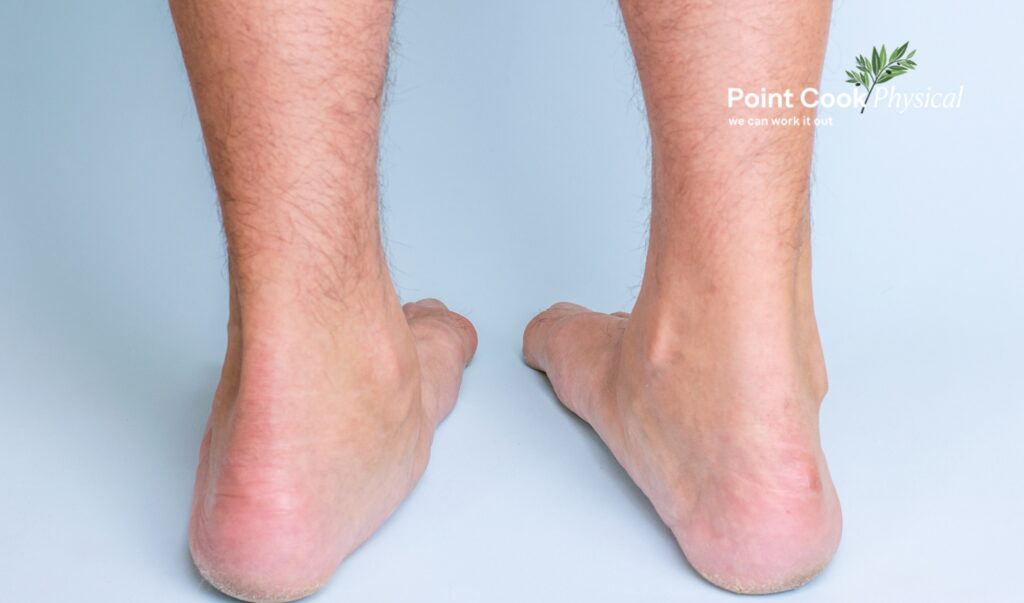
Take a look at your footprint next time you step out of the shower. If the whole sole leaves a mark with barely any curve along the inside edge, you’ve probably got flat feet, also known as pes planus. For a lot of people, that’s the end of the story: no pain, nothing to fix. For others, flat feet treatment may be recommended when symptoms such as pain, discomfort, or changes in foot structure start to affect daily activities. Patients often assume flat feet are automatically a problem. Usually, they aren’t. What actually matters is whether your feet can do what you need them to do, not what your footprint looks like.
Are Flat Feet Actually a Problem?
Having flat feet from birth is rarely a problem by itself. Feet come in a wide range of shapes, and a low or absent arch is simply one of them. When a podiatrist assesses flat feet, the appearance of the arch is only a small part of the picture. The real question is whether the foot can manage the physical demands placed on it, given a person’s age and how active they are.
Plenty of adults walk, run, and play sport for decades on flat feet that never cause a single issue. If your arches have been low since childhood, they’re flexible (an arch appears when you stand on your toes), and they don’t stop you from working, training, or simply getting through the day, there’s generally nothing to chase. Supportive footwear is often the only thing worth considering, and only if it’s comfortable enough to bother with.
Why Some Feet Are Flat and Others Aren’t
Arch height comes down largely to genetics and how flexible the connective tissue in your feet happens to be. Some people are simply born with more flexible ligaments throughout their body, and flat feet are often part of that picture. Children’s feet also start out flatter than adults, since the arch develops over the first several years as muscles strengthen and fat pads thin out. Most flexible flat feet in kids correct themselves without any intervention.
Flat feet can develop later in life too, rather than being something you were born with. The most common cause in adults is slow stretching or dysfunction of the posterior tibial tendon, a key structure that supports the arch from underneath. Weight changes and the cumulative load of standing and walking over decades can play a role as well. This is a different situation to having had low arches your whole life, and it tends to need a closer look.
When Flat Feet Are Worth a Closer Look
A handful of signs separate harmless flat feet from something that deserves a podiatry assessment. Pain that sticks around for more than a few weeks, particularly through the arch, heel, or the inside of the ankle, is the clearest signal. So is one foot becoming noticeably flatter than the other, or an arch that seems to be collapsing gradually over months rather than staying the way it’s always been.
A few other patterns are worth flagging too: a flat foot that stays rigid rather than flexible when you rise onto your toes, and increasing difficulty walking or standing for normal periods. Numbness or progressive weakness alongside a change in foot shape also warrant a look. None of these are common, but ongoing foot or ankle pain is reason enough to get things checked rather than wait it out.
Flat Feet Treatment Options: How Orthotics Can Help
Whether you need orthotics for flat feet comes down to symptoms, not appearance. Current evidence points to orthotics being genuinely useful when flat feet are symptomatic, not simply because an arch sits lower than average. Painful flexible flat feet, early signs of posterior tibial tendon dysfunction, plantar heel pain, and aching after long periods of standing or walking are the situations where orthotics tend to help most.
Asymptomatic flat feet are a weaker case for orthotics. If your feet aren’t bothering you, there’s limited evidence that wearing orthotics for prevention or to reshape your arch makes much difference. Well-fitted, prefabricated orthotics can also provide similar benefits to custom orthotics for many common foot complaints, which is worth considering before investing in a custom pair. Custom devices tend to earn their place with significant deformity or complex biomechanics, and when off-the-shelf options haven’t worked.
Working out which category your feet fall into is exactly what an assessment with our Point Cook podiatry team is for. Gait analysis and a proper foot assessment will tell you whether an orthotic makes sense for your feet, and if so, which type.
Exercises That Can Help Strengthen Your Arch
Exercise and orthotics solve different problems. Orthotics help redistribute pressure and provide support to reduce symptoms. Exercise builds the strength and control that support your arch from the inside, particularly if your flat feet are flexible rather than rigid. If you’re looking for flat feet exercises that genuinely help, two are worth prioritising.
Short Foot Exercise
This targets the intrinsic muscles running along the sole of your foot. Keep your toes relaxed and flat on the ground, then draw the ball of your foot toward your heel without curling your toes. You should feel your arch lift slightly. Hold for 5 to 10 seconds and repeat 10 to 15 times, progressing to standing and eventually single-leg stance as it gets easier.
Calf Raises and Balance Work
Strong calf muscles and good single-leg control both support healthy foot mechanics, since the posterior tibial tendon and calf complex work together to hold the arch up during walking and running. Start with double-leg heel raises, move to single-leg versions as strength improves, and work toward 20 to 25 controlled single-leg raises. Pairing this with single-leg balance drills, starting with eyes open and later progressing to an unstable surface, builds coordination that static stretching alone won’t give you.
These arch strengthening exercises won’t turn a structurally rigid flat foot into a high arch, and that’s a realistic limitation worth knowing upfront. For flexible flat feet, consistent strength work has been shown to genuinely improve how the foot performs, even if the visual arch height barely changes.
Flat Feet: Your Questions Answered
| Question | Answer |
|---|---|
| Are flat feet always a problem? | Not on their own. Most flat feet are simply a foot shape variation present from childhood, causing no pain or limitation. A podiatrist assessing flat feet treatment in Point Cook looks at how your foot functions during daily activity and exercise, not just how the arch looks when you’re standing still. |
| Why do some people have flat feet and others don’t? | Arch height is largely genetic, tied to how flexible your connective tissue naturally is. Children’s arches also develop gradually through early childhood, so many young flat feet correct themselves. Flat feet can develop later too, often linked to changes in the posterior tibial tendon that supports the arch. |
| Do I need orthotics for flat feet? | Usually only if your flat feet are causing symptoms. Orthotics tend to help with painful flexible flat feet, plantar heel pain, or fatigue after standing or walking, rather than asymptomatic low arches. A proper assessment can confirm whether a prefabricated or custom option suits your feet. |
| Can exercise actually increase my foot arch? | For flexible flat feet, targeted exercise such as the short foot exercise and calf and balance training can modestly improve dynamic arch support, strength, and symptoms. Rigid or structurally fixed flat feet respond less to exercise alone, but strength work can still improve comfort and function. |
| When should I see a podiatrist about flat feet? | Book an assessment if you notice persistent pain, one foot becoming flatter than the other, or a foot that stays rigid rather than flexible. New numbness, weakness, or balance changes alongside the foot change are also worth ruling out. |
Final Thoughts
Flat feet sit on a spectrum from a harmless variation in foot shape to a genuine source of pain and dysfunction. The difference comes down to function rather than appearance. Most people with flat feet need nothing more than comfortable footwear and the occasional check-in if something changes.
Orthotics and exercise both have a role for the smaller group of people whose flat feet cause genuine problems. Each solves a different part of the puzzle. The real answer to whether your flat feet need attention depends on what your feet are actually telling you, not on a quick look at your footprint.
If pain or changes in your arch are getting in the way, proper flat feet treatment in Point Cook starts with an assessment, not guesswork. Book an assessment with our Point Cook podiatrist and get a clear answer instead of guessing.