
Recovering from an injury or surgery can be a complex journey. While most people focus on physical therapy, there’s another essential piece of the puzzle often overlooked: nutrition. At Point Cook Physical, we believe that true recovery goes beyond movement—it starts from the inside out.
In this article, we explore how proper nutrition can support and accelerate healing, the key nutrients involved, and how our dietitians and physiotherapists work together to help you recover better than expected.
The Link Between Nutrition and Healing
Your body works hard to repair itself after injury or surgery. This process demands more than rest—it requires the right fuel. Nutritional status plays a major role in tissue repair, immune support, and energy production. Poor nutrition may delay recovery, increase inflammation, and limit rehabilitation outcomes.
Whether you’re recovering from a torn ligament, joint replacement, or repetitive strain injury, your body’s ability to heal hinges on receiving the right nutrients at the right time.
Read more on Healthdirect: Nutrition and Recovery.
Key Nutrients That Support Recovery
- Protein
Crucial for rebuilding muscle, repairing tissues, and supporting immune function.
Sources: Lean meats, legumes, dairy, tofu, eggs.
- Vitamin C
Supports collagen formation, wound healing, and immune defence.
Sources: Citrus fruits, capsicum, strawberries, broccoli.
- Zinc
Promotes cell growth and tissue repair, especially useful in wound healing.
Sources: Nuts, seeds, seafood, wholegrains, red meat.
- Omega-3 Fatty Acids
May help reduce inflammation and aid in soft tissue healing.
Sources: Fatty fish (like salmon), flaxseeds, chia seeds.
- Iron and B Vitamins
Important for energy metabolism and oxygen transport, especially post-surgery.
Sources: Leafy greens, meats, fortified cereals, legumes.
Learn more about these nutrients at Eat For Health.
The Role of Dietitians in Rehabilitation
At Point Cook Physical, our Accredited Practising Dietitians (APDs) are key members of your rehab team. They assess your nutritional needs based on your injury type, body composition, and overall health.
Whether you’re struggling with reduced appetite, food intolerances, or needing extra calories to support tissue healing, a dietitian can create a practical, evidence-based meal plan tailored to your goals. This is especially important for older adults, post-surgical patients, and those with chronic health conditions.
How Dietitians and Physiotherapists Work Together
Recovery is most effective when care is integrated. At our clinic, dietitians and physiotherapists collaborate to align your treatment plan, ensuring that what you eat supports how you move.
For example, if your physiotherapist is working to rebuild muscle post-injury, your dietitian will ensure you’re consuming enough protein and calories to support muscle synthesis. If inflammation is hindering progress, anti-inflammatory nutrients can be introduced strategically.
This kind of interdisciplinary approach helps us address the root cause of your condition and optimise outcomes across the board.
Why Combine Physiotherapy with Nutritional Support?
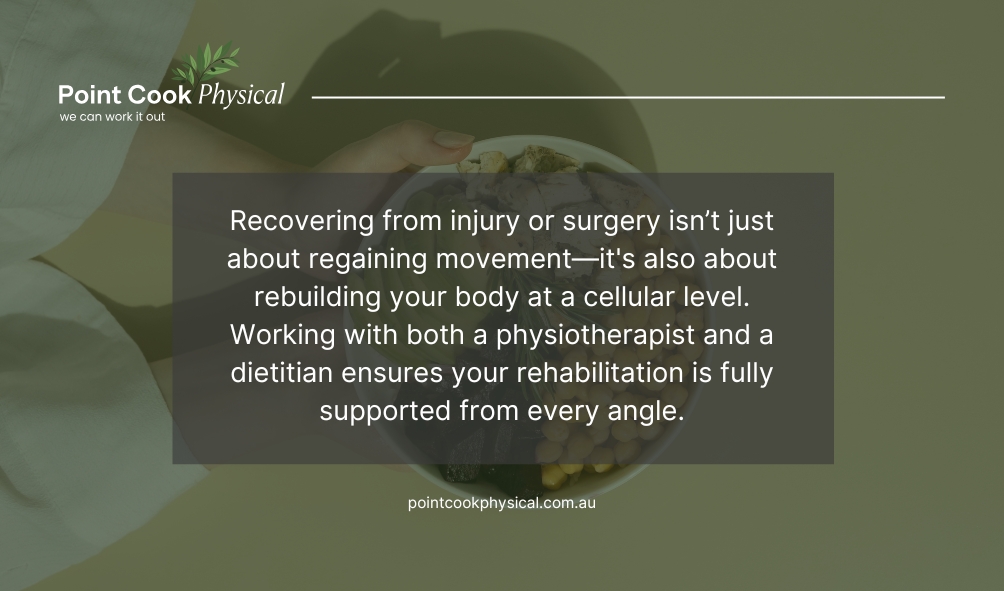
Recovering from injury or surgery isn’t just about regaining movement—it’s also about rebuilding your body at a cellular level. Working with both a physiotherapist and a dietitian ensures your rehabilitation is fully supported from every angle.
A physiotherapist helps restore strength, mobility, and function through targeted exercises and manual therapy. At the same time, a dietitian ensures your body is receiving the right nutrients to support tissue repair, reduce inflammation, and sustain energy during rehabilitation. Together, they develop an integrated care plan that aligns your physical goals with your nutritional needs.
This collaborative approach is especially valuable for:
- Post-surgical patients needing wound healing support
- Athletes recovering from high-impact injuries
- Individuals with low appetite, restricted mobility, or complex health conditions
- Anyone wanting a faster, more complete recovery
By seeking advice from both professionals, you’re investing in a recovery that’s not only effective but also personalised—helping you return to everyday life with confidence.

Final Thoughts
Your recovery journey is more than physical—it’s nutritional, emotional, and functional. At Point Cook Physical, our integrated team of physiotherapists and dietitians work together to deliver outcomes that not only meet but exceed your expectations.
By identifying and treating the root cause of your condition, and supporting your healing from the inside out, we help you return to the activities you love—stronger and healthier than before.